
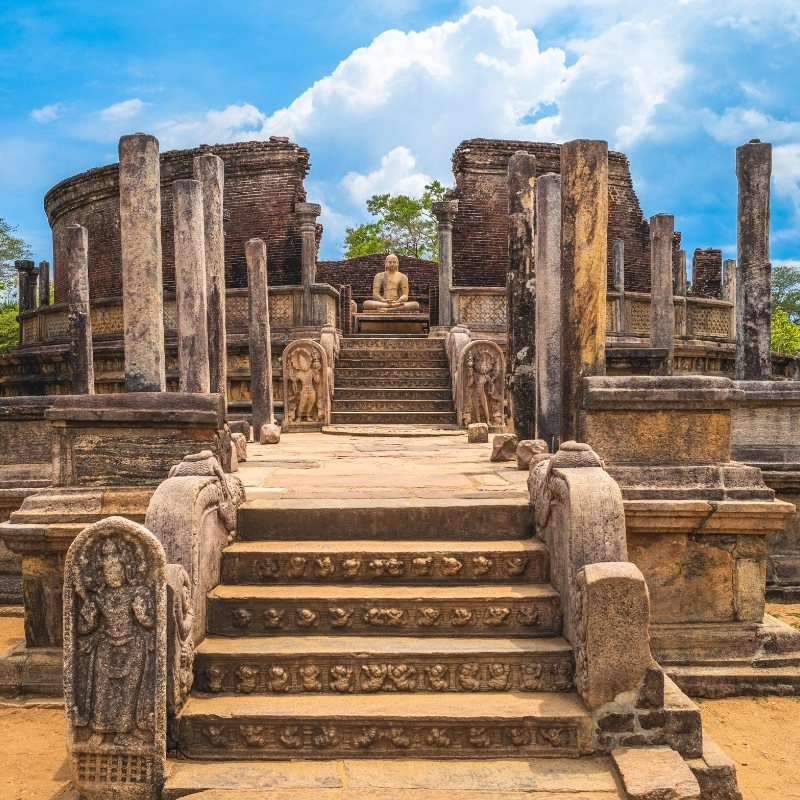
Located in Sri Lanka’s North Central Province, Polonnaruwa is a treasure trove of history, culture, and ancient architecture. Once the island’s second capital after the fall of Anuradhapura, Polonnaruwa flourished between the 11th and 13th centuries under the reign of King Parakramabahu I. Today, it stands as a UNESCO World Heritage Site, offering travelers a remarkable journey through ancient temples, statues, and irrigation marvels.
Explore the Ancient City
Polonnaruwa’s archaeological park is one of Sri Lanka’s best-preserved historical sites. Visitors can explore:
Royal Palace of King Parakramabahu – A grand complex that showcases the ingenuity of medieval Sri Lankan architecture.
Gal Vihara – A group of massive rock-cut Buddha statues carved from granite, considered masterpieces of Sinhalese sculpting.
Vatadage – A circular relic house with intricate carvings and stone pillars, used to protect sacred Buddhist relics.
Lankatilaka and Rankoth Vehera – Magnificent stupas and temples that reflect the grandeur of the Polonnaruwa period.
These structures illustrate the artistic and engineering brilliance of ancient Sri Lanka, making Polonnaruwa a must-visit for history enthusiasts and cultural travelers.
Breathtaking Landscapes and Nature
Beyond its historical sites, Polonnaruwa is surrounded by lush greenery and tranquil lakes, offering a scenic backdrop for exploration. The Parakrama Samudra, a massive reservoir built by King Parakramabahu I, showcases the sophistication of ancient Sri Lankan irrigation systems. The surrounding countryside is ideal for cycling tours, allowing visitors to navigate the ruins and enjoy panoramic views of rice paddies and rural villages.
Cycling Through History
Polonnaruwa is best explored by bicycle. The archaeological park spans a large area, and cycling provides an active and immersive experience, letting travelers move at their own pace while stopping to admire temples, statues, and serene water gardens. Bicycle rentals are widely available near the park entrance, making it easy for tourists to plan a full-day adventure.
Where to Stay
Polonnaruwa offers a range of accommodations, from comfortable hotels to eco-lodges. Popular options include The Sanctuary at Tissawewa, Polonnaruwa Rest House, and Heritage Hotel Polonnaruwa, all providing convenient access to the archaeological sites, guided tours, and local dining.
When to Visit
The ideal time to visit Polonnaruwa is during the dry season, from May to September, when the weather is suitable for exploring the ruins and cycling around the park. The cooler mornings and clear skies make it perfect for photography and sightseeing.
Why Visit Polonnaruwa
Polonnaruwa offers a unique combination of history, culture, and natural beauty. It’s a place where travelers can step back in time, exploring the ingenuity of ancient Sri Lankan civilization while enjoying serene landscapes and outdoor adventures. From majestic Buddha statues to sprawling reservoirs and quiet villages, Polonnaruwa provides a rich, immersive experience that reveals the island’s historical depth and cultural heritage.


