
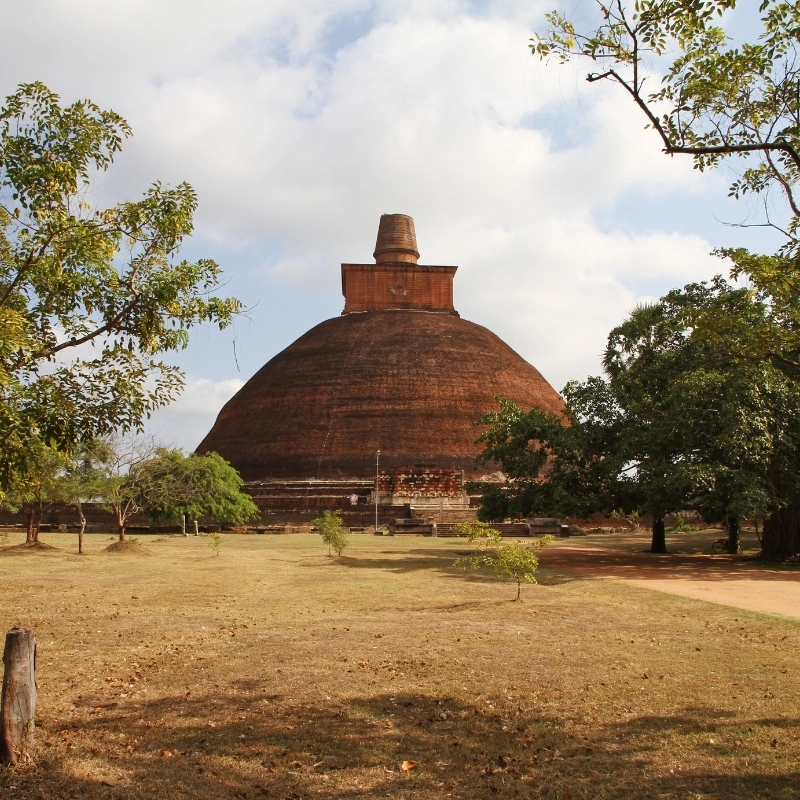
Situated in Sri Lanka’s North Central Province, Anuradhapura is one of the island’s oldest and most sacred cities. As the first established capital of Sri Lanka, it flourished from the 4th century BCE to the 11th century CE and is renowned for its well-preserved ruins, stupas, and Buddhist heritage. Today, Anuradhapura stands as a UNESCO World Heritage Site, offering travelers a profound journey through spirituality, history, and ancient engineering marvels.
Sacred Sites and Historical Monuments
Anuradhapura is home to numerous temples, dagobas (stupas), and sacred Bodhi trees. Key attractions include:
Sri Maha Bodhi – A sacred fig tree grown from a cutting of the original Bodhi tree under which Buddha attained enlightenment. Pilgrims from around the world come to pay their respects.
Ruwanwelisaya – A massive white stupa built by King Dutugemunu, symbolizing the zenith of ancient Sri Lankan architecture.
Thuparamaya – The oldest dagoba in the city, housing relics of the Buddha.
Abhayagiri Monastery – A vast monastic complex that once housed thousands of monks, with impressive stupas and stone carvings.
These sites offer a deep spiritual and historical experience, allowing travelers to connect with Sri Lanka’s Buddhist heritage and ancient culture.
Ancient Engineering and Irrigation
Anuradhapura was not just a spiritual hub; it was also a center of ancient innovation. The city is famous for its advanced irrigation systems, including tanks, canals, and reservoirs that supported agriculture and urban life for centuries. Abhayavapi and Basawakkulama reservoirs showcase the ingenuity of ancient engineers, reflecting how sustainability and architecture were integrated into everyday life.
Cycling Through History
Exploring Anuradhapura is best done by bicycle or tuk-tuk, allowing visitors to cover vast areas at their own pace. The archaeological zone is spread across many kilometers, and cycling provides a convenient and scenic way to navigate between stupas, monasteries, and ancient ponds. Along the way, travelers can enjoy lush greenery, peaceful pathways, and encounters with local wildlife such as monkeys and exotic birds.
Local Culture and Cuisine
Anuradhapura offers travelers a chance to experience authentic Sri Lankan culture. Nearby villages provide traditional food, including rice and curry, fresh tropical fruits, and local snacks. Seasonal festivals, such as Poson Poya, attract pilgrims and add vibrancy to the spiritual atmosphere, offering a glimpse into local traditions and rituals.
Where to Stay
Accommodation options range from heritage hotels to comfortable guesthouses. Popular choices include Palm Garden Village, Thilanka Hotel, and Ulagalla Resort. Many properties offer guided tours, cultural experiences, and proximity to the main archaeological sites, making it easy for travelers to explore the city’s treasures.
When to Visit
The best time to visit Anuradhapura is during the dry season, from December to April, when the weather is sunny and ideal for sightseeing, cycling, and photography. Avoid the monsoon months for a more comfortable experience.
Why Visit Anuradhapura
Anuradhapura offers a rare combination of spirituality, history, and natural beauty. From sacred Bodhi trees and towering stupas to serene reservoirs and ancient monasteries, every corner of the city tells a story of devotion, innovation, and cultural richness. For travelers seeking an immersive journey into Sri Lanka’s past, Anuradhapura is an unforgettable destination where history and spirituality coexist in perfect harmony.


