
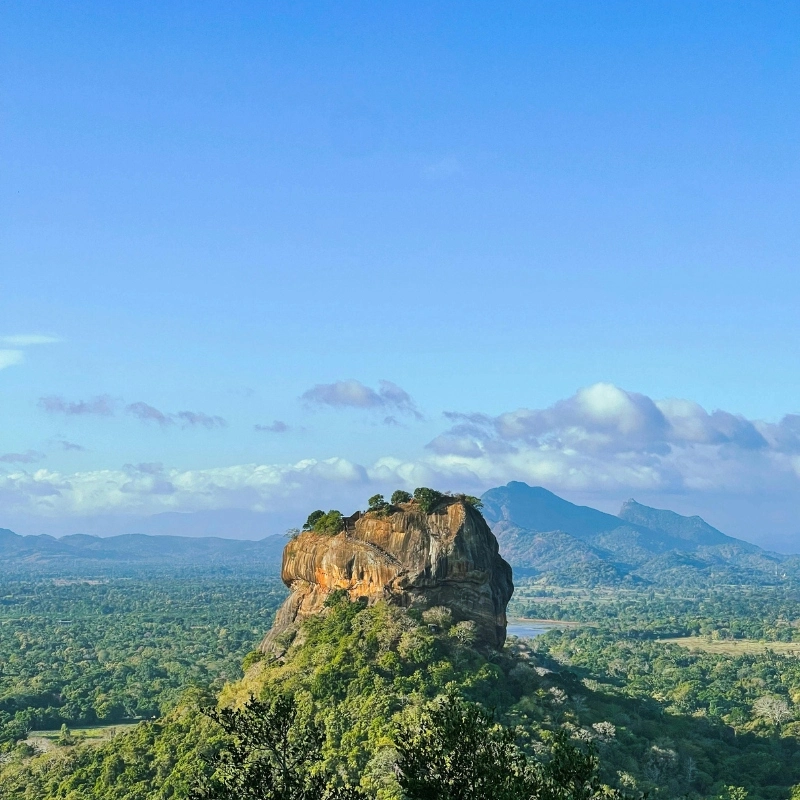
Rising dramatically from the central plains of Sri Lanka, Sigiriya is one of the island’s most iconic landmarks. Known as the Lion Rock, this ancient rock fortress is a UNESCO World Heritage Site and a testament to the ingenuity, art, and ambition of Sri Lanka’s early civilizations. Visitors are drawn to Sigiriya not only for its historical significance but also for the breathtaking panoramic views, ancient frescoes, and well-preserved gardens.
The Ancient Fortress
Sigiriya was built in the 5th century by King Kasyapa, who transformed a massive rock outcrop into a fortified royal palace. The climb to the summit is an adventure in itself, with stairs, terraces, and rock faces guiding visitors through history. Key features include:
The Lion’s Gate – The entrance is flanked by enormous lion paws carved from stone, symbolizing the fortress’s name and strength.
The Summit Palace – At the top, visitors can explore the remains of the king’s palace, including water gardens, pools, and throne areas, all ingeniously designed for defense and aesthetics.
Mirror Wall – Originally polished so well that the king could see his reflection, it is now adorned with ancient graffiti dating back centuries.
Climbing Sigiriya offers not only historical insight but also a rewarding view of the surrounding plains, forests, and villages — a photographer’s dream.
Ancient Frescoes and Art
One of Sigiriya’s highlights is its famous frescoes, painted on the rock face in brilliant colors. These delicate paintings depict celestial maidens and courtly life, providing a rare glimpse into the artistic sophistication of 5th-century Sri Lanka. The frescoes are carefully preserved, allowing visitors to appreciate the detail, style, and cultural significance of this ancient artwork.
Gardens and Water Features
Sigiriya is also celebrated for its ancient landscaped gardens, which include terraced gardens, water gardens, and boulder gardens. These gardens are not only aesthetically stunning but also demonstrate the advanced hydraulic engineering of the era, with pools, fountains, and irrigation systems still functional today.
Nearby Attractions
The area surrounding Sigiriya offers additional attractions for travelers:
Pidurangala Rock – A nearby rock formation with a slightly easier climb and stunning views of Sigiriya from a different perspective.
Minneriya National Park – A short drive away, famous for elephant safaris and diverse wildlife.
Dambulla Cave Temple – Located about 20 minutes away, featuring Buddhist cave paintings and statues dating back over 2,000 years.
Where to Stay
Visitors can choose from a variety of accommodations ranging from luxury resorts to boutique hotels and guesthouses. Popular options include Heritance Kandalama, Sigiriya Village Hotel, and Aliya Resort & Spa, all offering convenient access to the rock fortress and surrounding attractions.
When to Visit
The best time to explore Sigiriya is between December and April, during the dry season, when the climb is safer and the skies are clear for stunning panoramic views. Early morning visits are recommended to avoid crowds and the midday heat.
Why Visit Sigiriya
Sigiriya is more than just a climb; it’s a journey through history, art, and natural beauty. From its magnificent frescoes to its strategic palace atop the rock and surrounding gardens, Sigiriya offers travelers a unique blend of adventure, culture, and breathtaking scenery. It is a must-visit destination for anyone seeking to experience Sri Lanka’s ancient heritage at its finest.


